Tuesday, January 27, 2009

Now that I've written about the World Cup Ski Jump competition and the Fire & Ice show, it's time to write about the skiing.


With out a doubt, Whistler/Blackcomb is my absolute favorite place to ski. We've been coming here since 1987, when it was still two separate mountains. Usually at this time of year, the weather is pretty snowy, but this winter has been an anomoly. Whistler hasn't had new snow in several weeks. But the skiing is still pretty good.


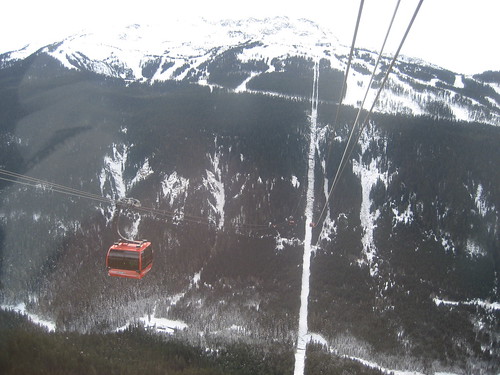
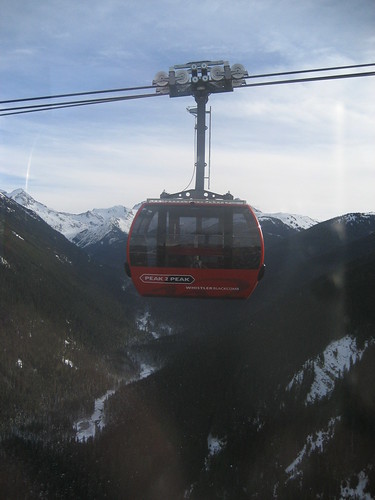
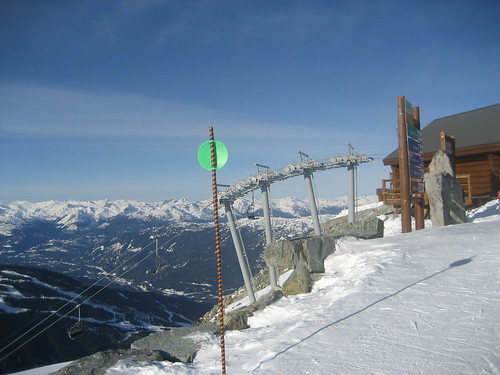
One of the high points of this year's trip has been riding the new Peak to Peak lift, which connects the Rendezvous lodge at the top of Blackcomb with the Roundhouse lodge at the top of Whistler. This gondola sets all sorts of records, including the longest span between towers, at 1.8 miles.


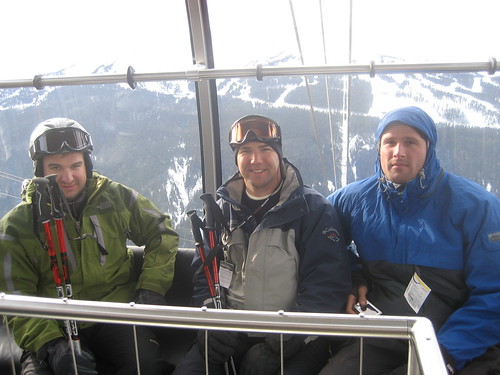
Here's Brian, my son Bruce, and Mike on Monday on our morning trip across from Blackcomb to Whistler. Our condo is on Blackcomb, so after a few runs on Blackcomb we took the Peak to Peak over to the Whistler side.


I was a bit skeptical when I first heard that Interwest was going to build this thing, but we've ridden it everyday and thoroughly enjoyed it. It's a great way to quickly get from one mountain to the other. Before this lift opened in December, you had to ski all the way down to the village and then take a long lift up on the other mountain. Now you can get from one mountain to the other in 12 minutes.


You also get a fantastic and dramatic view on the ride over.


While we certainly could use more snow, it's nice to ski in January at Whistler with bright blue skies. Usually it snows nearly everyday in January at Whistler.


There's also been very little wind, which has made skiing up in the high alpine quite nice. The high pressure center that has been sitting off the coast has caused a significant inversion layer. So it's actually been warmer at the top of the mountain than in the valley.


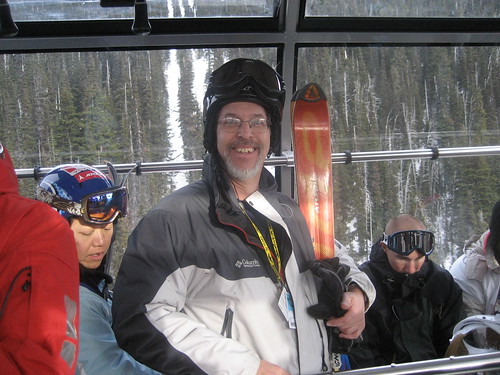
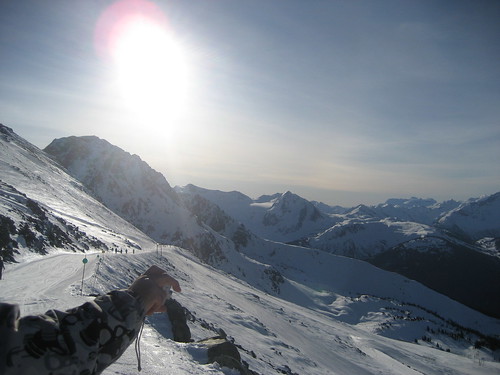
So we've had bright, crisp mornings skiing the 7th Heaven area on Blackcomb.


Don't Bruce and I look like we're having a great time. Looks aren't deceiving. I really look forward to this trip each year, skiing with my son and several of his pilot friends.


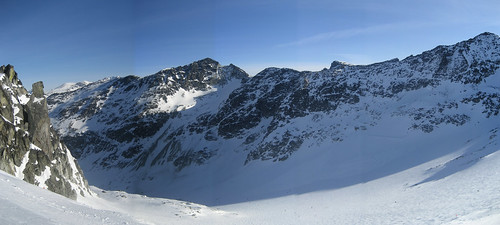
After several runs in 7th Heaven, we take the T-bar up to the top of the glacier, climb 100 yeards up above the lift, and then drop down into Whistler Bowl, which is absolutely incredible. In spite of the lack of snow, the conditions out here are still pretty remarkable, as you can see in this panorama.


Unfortunately, our skiing took a bit of a bad turn on Tuesday morning. On our first warmup run of the day, with the first fresh snow since we arrived last Wednesday, Bruce hit some ice and fell, twisting his left knee significantly as he went down. He had to be taken off the mountain in a tobaggan, with what appears to be a torn ACL. So he's done skiing for this season.

We'll head back home tomorrow.

There are lots more photos of our better skiing experiences on my Flickr site.

Sunday, January 25, 2009

Whister Fire & Ice

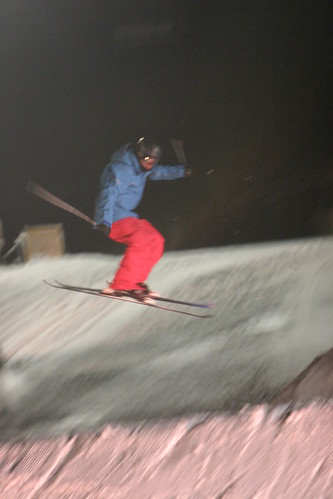
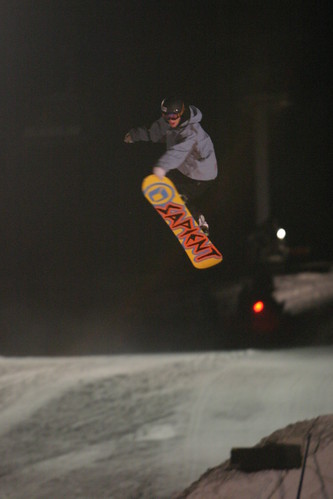
After the ski jumping, we spent the rest of Sunday afternoon relaxing. But that evening, we went down to the Whistler Village to watch the Fire & Ice show. This has become a regular weekly event at Whistler, in which a number of ski instructors perform some extreme skiing stunts off a jump built at the bottom of the main run down off Whistler Mountain.


The performance started off with some simple jumps and the proceeded to get much more daring, with lots of flips and twists.


It featured both skiers and borders. After each stunt, the skiers and borders got towed back up the hill behind a snowmobile.


Then there was a brief pause while several people put up a ring, which they then lite on fire. Then the skiers and borders proceeded to do their stunts though the ring of fire.


The evening concluded with a brief fireworks display.

You can see more photos of the Whistler Fire & Ice show on my Flickr site.

World Cup Ski Jumping at Whistler

I'm currently up at Whistler, British Columbia skiing with my son and several of his pilot friends. This is an annual trip, but this year was made more special by the fact that this year is also the run-up to next year's Vancouver Winter Olympics. As a result, most of the World Cup events are being run in Whistler this year to test the venues in preparation for next year's Winter Olympics.


Saturday and Sunday were the World Cup Ski Jumping competition. So we decided to take a day off from skiing on Sunday to go watch. The World Cup Ski Jump was free, although those without transportation had to pay $15 to take a shuttle bus from the Whistler village to the venue, which is a considerable way south of Whistler.


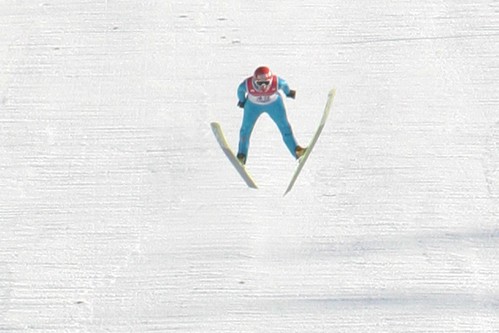
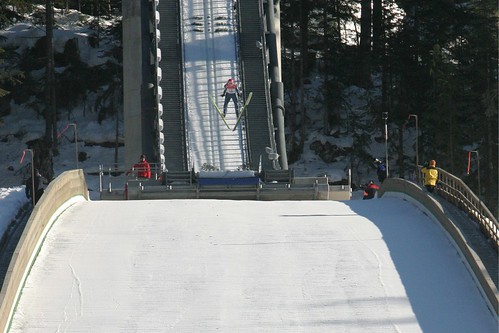
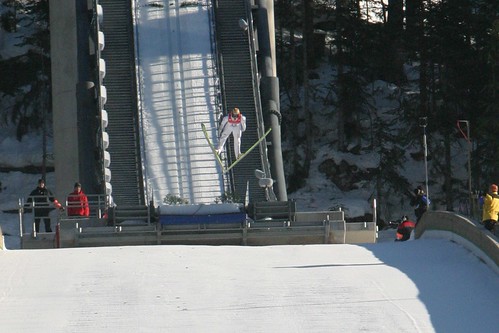
While the event was fantastic, and we were able to get incredibly close to the competition (as you can see from these photos), getting to the venue left much to be desired, and the VOC (Vancouver Olympic Committee) will have to do a lot to improve things before the world turns its attention to Whistler next year.

We left the village around 10am to make the short drive to the venue, which is 6 miles south of the village and then about 4 miles up a dead-end road into a secluded valley. The Nordic venue is brand new and houses both the ski jump hill and the cross country events. The turn off from the main road is not well marked and has no traffic control. Once we started up the road, we quickly encountered bumper-to-bumper traffic. Evidently, a lot of people decided to go check out the event.


We spent more than an hour slowly moving up toward the event. But there are absolutely no signs along the road, so we had no way of knowing if we were getting close or had miles to go. Word finally filtered back through the line that there was no more parking and officials were turning cars back. Rather than give up, we parked the car along the side of the road and hailed a taxi.


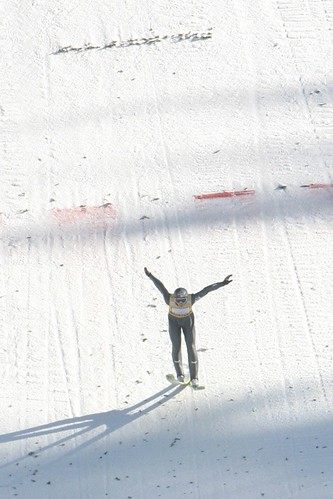
That was a good decision, because by the time we got to the jump hill, the final round of competition had already started. They said later that there were 20,000 people at the event, but the crowd looked much smaller than that. We had no problem getting very close to the end of the run-out at the base of the jump hill.


The ski jumping was incredible. As we watched, the competition moved into the final group of 10 that had the longest jumps in the first round. The jumps just kept getting longer and longer, with several jumps beyond 140 meters.


But then a jumper went an incredible 149 meters, setting a new hill record. So next year, when you watch the Olympic Ski Jump and hear them talk about the hill record, remember I was there.


We stayed for the medal ceremony and then hailed a cab back to where we had parked the car. We were back in Whistler Village by 1:30pm. And who won, G. Schlierenzauer from Austria won the gold, Thomas Morgenstern from Austrai the silver, and Ville Larinto from Finland took the bronze.

You can see more photos on my Flickr site.

Sunday, January 11, 2009

David Does Delhi

I have had the amazingly fortunate opportunity to travel to Delhi, India this past week. I won't go into the details as to the reason for my trip at present, other than to say that it was business-related.

I left Bellingham on Friday, January 9, flying to Seattle and Chicago before boarding a 14.5-hour American Airlines non-stop to Delhi, arriving just before midnight local time on Saturday, January 10.

I was met at the airport by a driver who took me to my accommodations. The next morning, bright and early, he and a representative from the company with which I was to be meeting picked me up and we began our nearly 3-hour drive to Agra. If I was going to travel halfway around the world, I wanted to see the Taj Mahal.

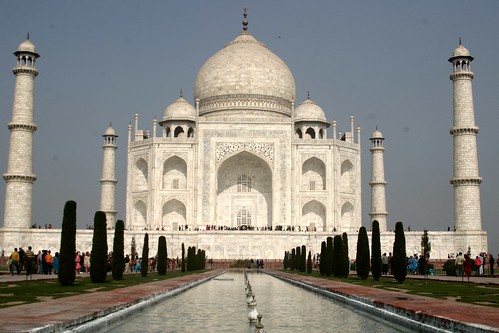
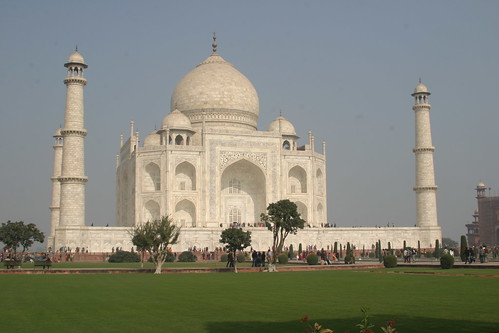
The Taj was absolutely everything I had ever imagined it to be, and more. I was familiar with the story behind the Taj Mahal as well as theories about its design, having studied non-western architecture while an architecture student at Syracuse University and also having worked on an article about the Taj Mahal in the June 1989 issue of CADalyst magazine.

The emperor Shah Jahan built the Taj Mahal as a tomb for his queen Mumtaz Mahal. Construction began in 1632 and was completed in 1648. It is considered the finest example of Mughal architecture in the world, a style that combines elements from Persian, Ottoman, India, and Islamic architecture styles.

While the gorgeous domed white marble mausoleum is the most famous structure, the Taj Mahal is actually an integrated complex of structures. Security surrounding the complex is quite strict. Upon arriving in Agra, we had to park our car nearly a mile away. From there, we hired a bicycle rickshaw to take us to the entry to the complex. There I had to check the little mini-tripod I normally keep in my camera bag, although I was able to keep my two digital cameras and my video camera at this point.

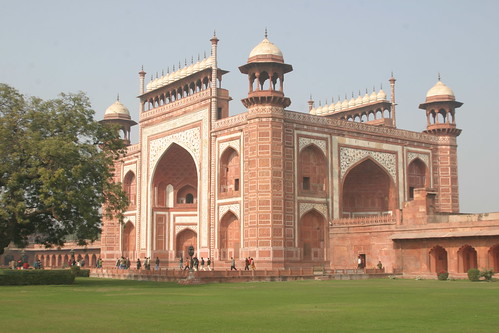
We entered the Taj Mahal complex after passing through a metal detector and proceeded through the outer gardens, which are completely surrounded on three sides by red sandstone walls. The fourth side, which faces the Yamuna river, is open. At this point, you still can't see the main mausoleum. What you do see is the Great Gate, a monumental structure of marble and sandstone whose arches are very similar to those of the Taj itself.

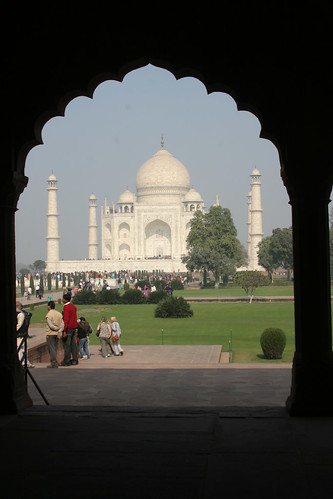
My first glimpse of the main mausoleum is through the huge arch in the gateway. I can't even begin to describe the level of excitement and anticipation. I know what's beyond that gate. Amazingly, the tomb is perfectly framed within the dark archway. At this point, I have to relinquish my video camera. For some reason, you can't shoot video beyond the platform of the Great Gate, although you can continue to take still photograhs everywhere except inside the main mausoleum itself.

Once through the gateway, you're standing on the raised platform, facing the Taj Mahal and viewing its perfect symmetry along the central north-south axis of a long reflecting pool. A raised marble water tank sits at the center of the garden, halfway between the tomb and the gateway, at the intersection of a second set of reflecting pools running east-west.

The tomb sits in the middle of a two-and-a-half acre square platform, surrounded by a low parapet. At each corner of this platform is a minaret, each more than 40 meters tall. By far, the most striking element is the huge dome, which at about 35 meters in height is as tall as the lower portion of the building.

From a distance, the tomb appears to float over the garden. To the right of the tomb is the red sandstone Jawab or assembly building and to the left the similarly colored masque.

The perfect symmetry of the entire complex is quite incredible. I wish I had re-read Ron Lane-Smith's original CADalyst article before my journey. In it, he theorizes many aspects of the design of the Taj Mahal, one of which was that the Jawab was actually the place where components of the tomb were drawn out full-size before being constructed, making the term "assembly building" much more literal than its accepted definition as a place of gathering. He notes that the floor of the Jawab still bears the full-size stencil of the main dome's finial.

I was quite unprepared for the beauty and detail of the tomb's exterior decoration. The walls of the tomb itself consist of a rubble core, but are clad in white marble. Into this various thin colored stones are inlaid to create calligraphy. There are also carvings and elements painted onto the marble. In addition to the calligraphy are abstract forms and vegetation motifs.

The calligraphy is made using jasper inlaid in the white marble panels, and is quite detailed and delicate. The vegetation motifs in the lower walls of the tomb are sculpted bas relief with realistic vines and flowers as well as inlays of highly stylized, almost geometric vines, flowers, and fruits. The inlay stones are yellow marble, jasper, and jade, leveled and polished smooth to the surface of the walls. Happily, I saw very little evidence of damage.

They say that the Taj Mahal changes color over the course of the day, and this is probably very true. The marble panels are thin enough that they actually are translucent, and inside the tomb our guide puts a small flashlight up against the stone and I can see that it actually illuminates the colored inlaid stones so that they appear to glow from within.

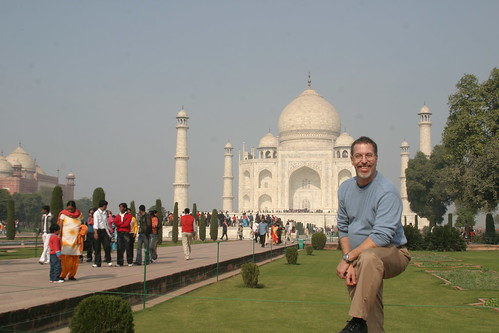
By the way, it's nearly impossible to visit the Taj without a guide. We were approached numerous times while outside the gate by supposedly "government authorized" guides who offered to enhance our Taj experience. But in spite of rebuffing those attempts, an older Indian man latched onto us as soon as we made our way inside the grounds and stuck to us like glue thereafter. He turned out to be a nice guy who did indeed know a lot about the Taj. He also loved playing with my Canon 10D and lenses, and so I actually managed to get into a few photos for a change. He was also quite clever, sending Jerish my host back to reclaim my video camera so that he would not be around when the guide ultimately asked me to pay him a fee for his services. Jerish said afterwards that 500 rupees was too much, but I thought the $10.28 equivalent well worth it.

They tell me that I picked a perfect day to visit the Taj Mahal. We arrived relatively early in the day. We visited on a Sunday, which explained the smaller-than-normal crowds. The temperature was a very pleasant 70-degrees.

Unfortunately, I am incredibly tired. Having just arrived after my long flight, and having managed less than four hours of sleep owing to the late arrival of my flight, I know that I'm fading fast. And we still have the nearly 3-hour drive from Agra back to Delhi.

I am pretty sure that I'll be coming back to India again soon. So I resolve myself to the fact that I must leave with lots of other areas of the Taj Mahal and Agra still remaining to be explored. For example, as we're leaving Agra, I catch a glimpse of the Taj Mahal perched high above the banks of the Yamuna River. And then there's the Moonlight Garden on the opposite bank of the river. I must come back and take photos of the tomb from these vantage points.

There's still plenty more to see on the road between Delhi and Agra, and I'll have some time to explore Delhi itself in the next several days. So I'll close this for now, get some rest, and continue describing my first experiences of India tomorrow.

You can see more photos from my trip on my Flickr site.

Wednesday, December 31, 2008

Happy New Year 2009


I just want to wish everyone a happy, healthy, peaceful, and fulfilling new year.

This photo was taken in Seattle at the Space Needle on New Year's Eve 2005. We're actually spending a very quiet evening at home tonight. Tomorrow we're hosting our second annual New Year's Day Open House and Soup Fest.

And then next week I should be winging my way to India, in pursuit of a very interesting job opportunity. I hope to share more about this with you in the weeks to come.

Tuesday, December 23, 2008

Movie Review: Man on Wire


Maybe it's the writer in me. Or the fact that I watch a lot of movies. But for whatever reason, I felt compelled to write a movie review. At least the movie in question has some link to the other themes of this blog.

To simply say that Man on Wire tells the story of French high-wire walker Philippe Petit's stroll between the towers of the World Trade Center misses the point completely. Most New Yorkers know that on the morning of August 7, 1974, Petit not only walked a wire strung between the roofs of the two towers, he spent nearly an hour walking back and forth, even laying down on the wire at one point and saluting the police waiting to take him into custody. The film's title is a reference to the charges filed against Petit, (tresspassing, disturbing the peace, "man on wire"), which were later dismissed in exchange for him putting on slightly more sedate, free performance for the children of New York.

I even remember where I was that day (although it's not an event so etched in my memory that I remember what I was doing, or anything like that). But that was quite a summer. I was taking summer classes at Syracuse University School of Architecture. A few weeks later, Richard Nixon resigned.

Nor can you just say that Man on Wire is a documentary. Because in spite of the fact that we know what's going to happen, British filmmaker James Marsh delivers a pulse-pounding story that's more like a thriller than many supposed thrillers I've watched recently. It helps that the young Petit had the foresight to film much of the preparation for his feat. Of course, there was also news footage of those preparations, like the time he secretly rigged a wire and then walked between the towers of Notre Dame Catherdral in Paris. He later performed a similar feat between two towers of the Harbour Bridge in Sydney, Australia.

The film integrates Petit's "home movies" with stylized re-enactments and interviews with many of the participants as the director documents every step Petit and his team took to circumvent both the security at the nearly completed World Trade Center and the physics of smuggling nearly a ton of stainless steel cable and rigging into the towers and then figuring out how to string it between them.

Thirty-five years later, and with the twin towers gone, the feat, and this film, remain absolutely mind-blowing. When I brought the DVD out to watch the other night, my daughter initially wanted no part. But inertia prevented her from leaving the room and minutes into the film, she was hooked. We even ended up watching all the special features. I think you will as well.

Wednesday, December 17, 2008

New HP Mobile Workstation

As many of you know, I am a long-time contributing editor to Desktop Engineering magazine and several other publications. One of my regular subjects is reviewing the latest computers.

I have long been a fan of HP. Their workstations—both desktop and portable—have always been absolutely superb. My own personal computer is an HP Compaq 8510w mobile workstation, which happens to be the fifth or sixth in a series of HP notebook computers I have used over the years. I am extremely happy with my HP portable workstation and recommend it to others whenever the subject comes up in conversations as I travel the country.

So you can imagine how much I was looking forward to reviewing the latest system in the HP mobile workstation line: the EliteBook 8530w. My first impression is a bit more "mixed" than usual. The system itself is quite elegant—much more modern and streamlined than even my relatively new 8510w—but some of the design decisions compromise things I've loved in the older models.


The new HP EliteBook 8530w features an elegant new design.

For example, I've long applauded HP for putting little icons around the keyboard that clearly identify the various ports around the edges of the notebook, making it extremely easy to find the right port without having to tip the system up on its side. This simple touch, present on all the HP mobile workstations I've owned or reviewed in the past, are not present on the 8530w.


Unfortunately, the new design eliminates the handy icons, seen here on the older HP Compaq 8710w mobile workstation, that clearly identified each port located on the edge of the computer.

According to an HP rep I spoke with, these were eliminated in the new EliteBook because instead of the gray finish on all of the previous models, the new EliteBook uses HP's new DuraCase design, which features a brushed aluminum skin bonded to a magnesium alloy chassis. The attractive two-tone appearance meant that to include the little icons would have required two separate silk screening steps and wouldn't be in keeping with the new design. So it seems that appearance has trumped functionality. Too bad.

The evaluation unit I received came with Windows Vista Business edition. I still prefer Windows XP for production CAD work, but I've had no serious issues with Vista...at least not until now. My first problem involved user rights management. I found it nearly impossible to install and run some of my standard benchmark tests until I finally dove deep enough into the operating system to completely disable the User Account Management (UAM) functions and also create several new directories (explicitely making them writable) that should have otherwise been created by the benchmark's own installation routine. I never had to do this in the past. What else did Microsoft change in this release of Vista?

After finally overcoming the UAM limitations, imagine my surprise when I attempted to run my standard battery life test. That test consists of first setting the system for maximum power conservation, unplugging the power supply (so that the system is running on its internal battery) and then playing a DVD video and recording the time until the battery is completely exhausted.

Apparently, Microsoft doesn't believe that business users watch movies on long flights. Windows Vista Business doesn't include the necessary codec to play videos. While it appeared at first that users would need to either upgrade to a different (more expensive) version of Windows Vista or purchase, download, and install a third-party codec, HP actually includes a copy of WinDVD as well as lots of other useful software. This was not initially evident, however, because none of this software was pre-installed, just pre-loaded. HP calls this a "lean image." You need to run a software setup utility to install this additional software.

I'm still in the early stages of my evaluation of this system, so please do not consider this to be anything more than a first impression. I'm just starting to run my benchmarks. I'm actually going to test this system multiple times. HP graciously sent me a second hard disk containing Windows XP. So after running all my tests using Vista, I'll test again under XP.

Watch for my in-depth review in a future issue of Desktop Engineering magazine.